
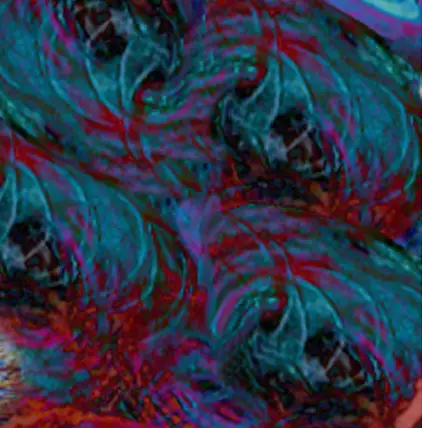
Art is a dream dreamt by the artist which the spectator can never see in its true structure.” — Anton Ehrenzweig
I am both an artist and a psychotherapist. What continually intrigues me is the partnership between these two disciplines—art and psychotherapy—as both are deeply rooted in process, transformation, and the unconscious.
In my practice and my creative life, I do not see art and psychotherapy as separate endeavours, but as interwoven processes of expression, discovery, and reparation. Both require a capacity for letting go. In therapy, this often means surrendering the illusion of control—allowing space for what lies beneath the surface to emerge. In art, it’s a surrender to the materials and medium—to stop striving for perfection and instead allow creativity and play to take the lead.
Letting go, in both disciplines, opens the door to surprise, to authenticity, and to the unknown. It’s in this surrender that new possibilities are born.
Much of my artwork is abstract and freeform, exploring movement, colour, and texture without a need for fixed meaning. Like the therapeutic process, the art emerges over time—often without clear direction or conscious intent. Both are iterative: a reworking of something previously known or felt, but never fully captured.
Psychotherapy is a collaborative unfolding. Clients may come in with a diagnosis or narrative, yet what emerges in the therapeutic space is rarely what they—or I—expected. There’s a parallel here with the creative process: the initial impulse to create is only a beginning. The outcome is shaped by the dialogue between intention and material, between known and unknown.
As an artist, my work is rarely about representation—it is about resonance. In psychotherapy, too, we’re not trying to draw a precise map of the mind, but to attend to affect, to relational shifts, to what’s unsaid as much as what’s spoken.
When I create, I return to a kind of play that is foundational in both art and therapy. Influenced by abstract expressionism, batik, and tie-dye traditions, I find that much of my creative process involves disruption—welcoming so-called “accidents” as opportunities for transformation.
Ehrenzweig reminds us that “an accident is a relative term.” In both therapy and art, it is often in the accident—the unexpected response, the rupture, the unplanned mark—that something essential is revealed.
The wax in batik,(much of my work is influenced by batik art) for instance, cannot be perfectly controlled. It flows in its own time, responding to heat and pressure. There is no turning back in the process—only adaptation. This mirrors the therapeutic process, where control must give way to presence, and uncertainty becomes fertile ground.
After years of exhibiting and experimenting—from textile design to digital layering, from wall hangings to greeting cards—my creative journey continues to evolve. But the thread remains the same: both my art and my therapeutic work are acts of witnessing, of translating inner experience into outer form.
Psychotherapy teaches us that identity is fluid, multi-layered, and shaped through relationship. My art practice reflects the same. Over the years, it has become a visual diary of internal movement and transformation. The process of creating—like the process of healing—is not linear, and rarely predictable. It is a dance between structure and spontaneity, between the conscious and the unconscious.
In both fields, we are required to stay curious. It is only through curiosity that we can resist the pressures of conformity, sameness, or rigidity. Whether with a client or with a blank canvas, I return to the same question: What is possible here?
The partnership between art and psychotherapy offers no fixed answers—only a commitment to presence, process, and imagination. That, for me, is where the work truly begins.
Reference:
Ehrenzweig, A. (1967). The Hidden Order of Art: A Study in the Psychology of Artistic Imagination. University of California Press.
— Abi Canepa-Anson
12.10.22